
The Susquehannock Trail leads through some of the most remote terrain in Pennsylvania. One genuinely feels “out there” in a way I’m not entirely used to. My jaunts in India, while definitely adventurous, mostly revolve around villages, i.e., people. Solitude, even if desired, is not an option. But doing the whole 80+ mile circuit of the Susquehannock Trail, I only encountered seven or eight other hikers, and they were all going the other way.
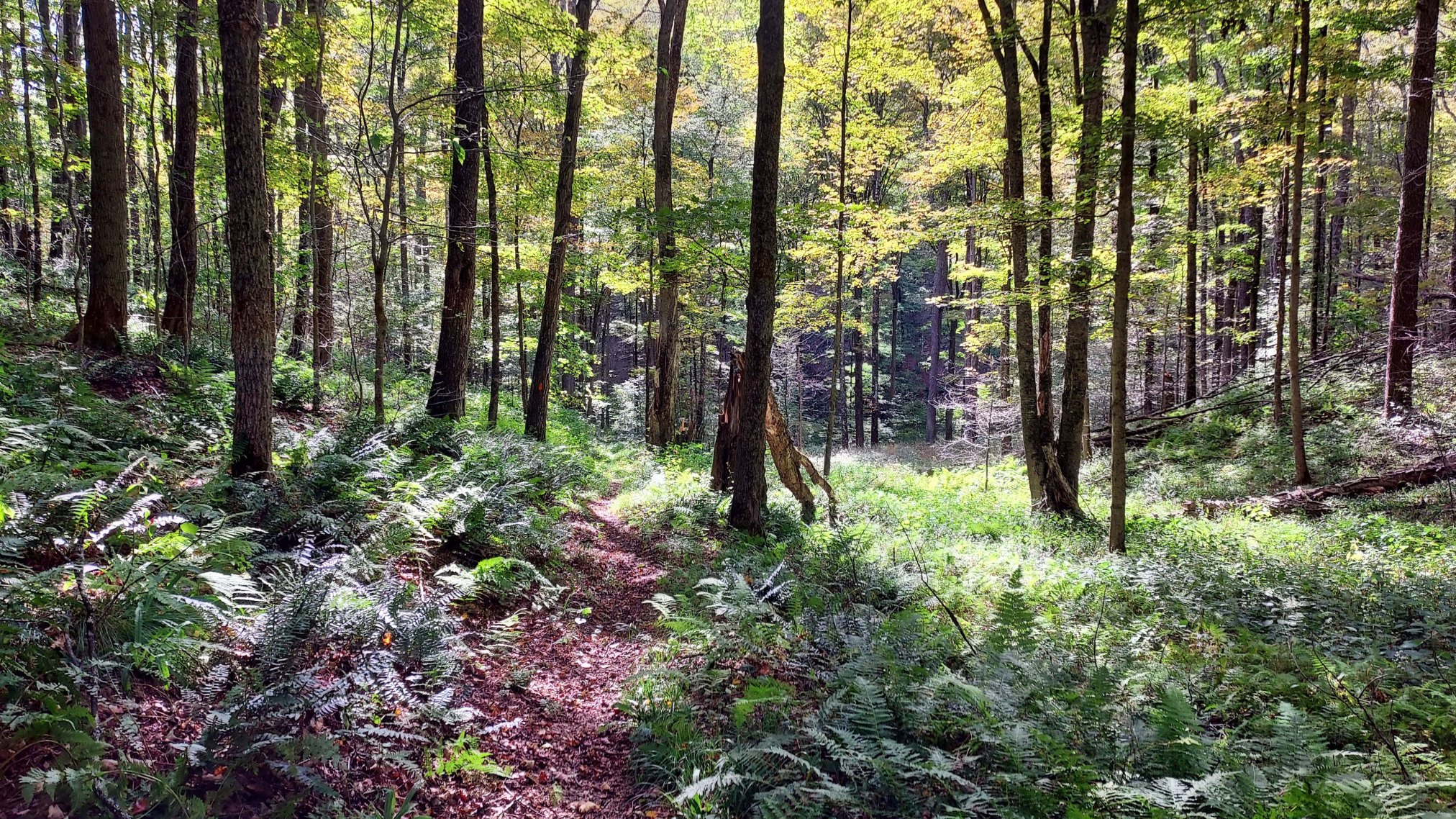
Ferny woods descending into Ford Hollow. This is on the western side of the Susquehannock Trail loop. The path here may look faint, but this was actually a comparatively clear stretch. One disadvantage of hiking a route which is both long and lightly traveled is that trail maintenance is often lacking. There were long stretches where I was battling walls of nettles and thorns for hours on end. The views were nice though…it was kind of like the picture above, over and over and over and over and over again.
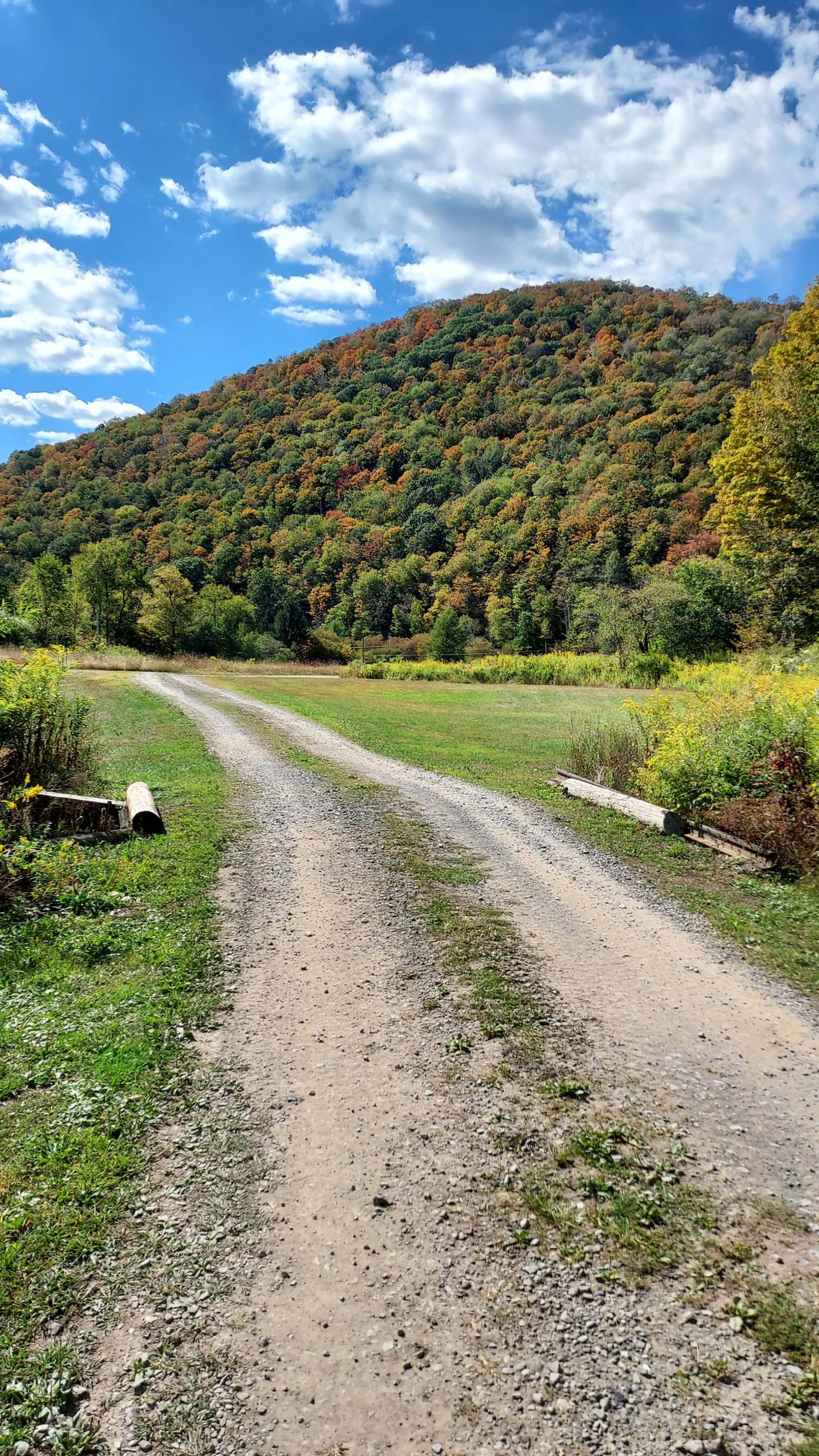
This is a stretch where the trail crosses through the valley of the East Fork of Sinnemahoning Creek, where there’s a very small community (a few barns and a couple of houses). It’s one of the few spots on the hike where you’re at the base of the mountains looking up and can actually see them. That came as a relief. There are long miles where the views consist mostly of the leaves smacking you in the face. Don’t get me wrong; that has its own charm, but it’s also nice to get a sense of the landscape.
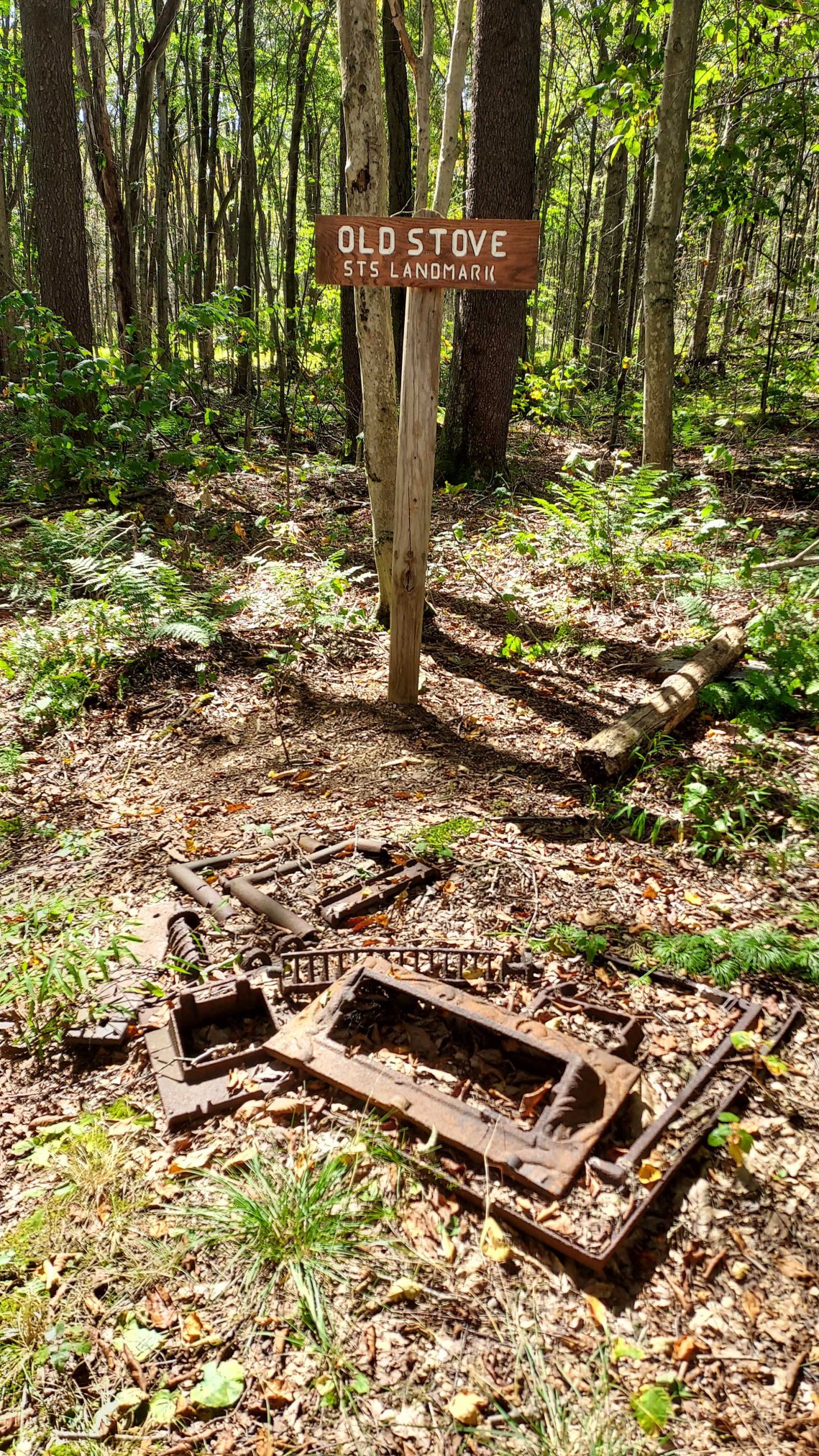
Unquestionably the highlight of the Susquehannock Trail, and perhaps all Pennsylvania.
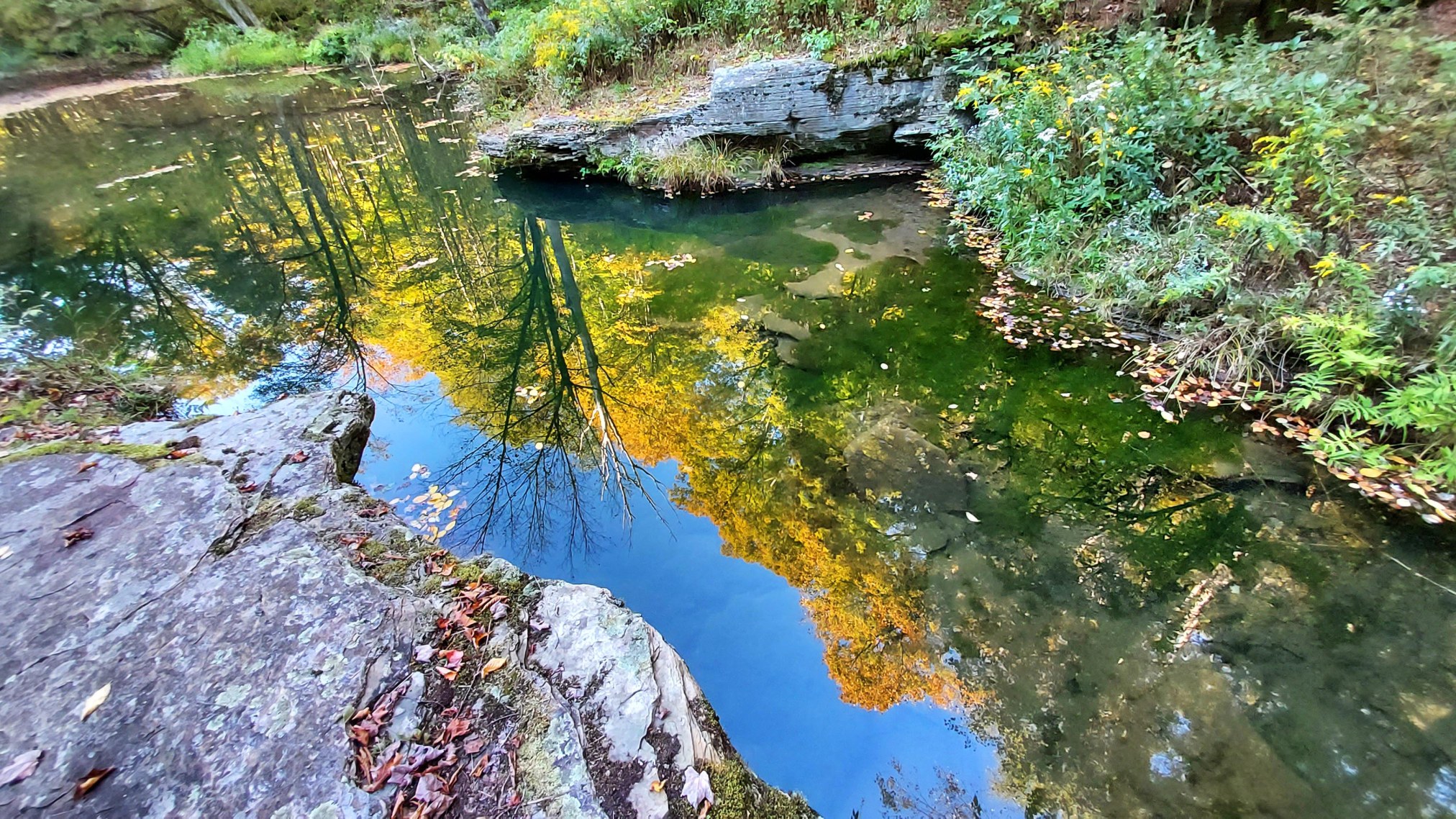
Early fall foliage reflected in Hammersley Run. This is just about the most famous spot on the Susquehannock Trail (which really isn’t saying much). The creek here is deep enough for a swim, which is rare in this part of the state.
This is in the Hammersley Wild Area, which is said to be the largest roadless tract in Pennsylvania. That is, it’s the largest area without roads currently in use; like everywhere else in the Pennsylvania Wilds, the forests here are cut through with the eerie remains of giant timber operations. Even in the Hammersley Wild Area, where I was alone for miles around, the signs of the region’s previous despoliation were unavoidable. The woods are full of road cuts and railway embankments that have faded into the terrain, becoming as much a part of the ancient landscape as creeks and rocky outcroppings.
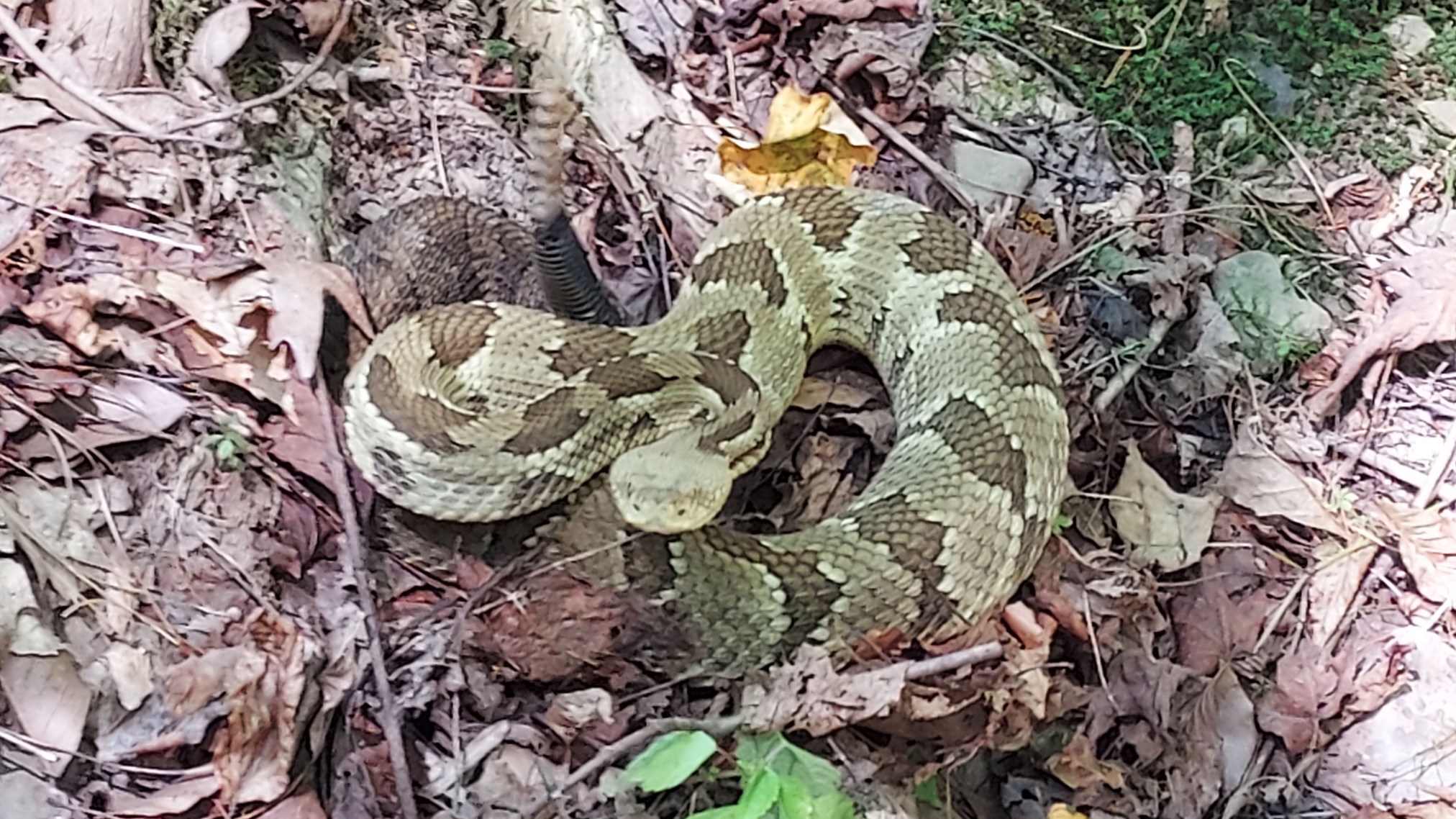
Big ol’ timber rattlesnake. There’s nothing better than a rattlesnake. There’s lots of rattlesnakes in these parts.
Only a few minutes before I saw this guy, I also spotted a family of bears. It was two cubs and a momma bear. I didn’t get much of a view of the momma bear, but I could see the cubs because once they noticed I was on the trail, they scurried up into the trees and started scrambling from branch to branch kind of like monkeys. I didn’t know they could do that.
Don’t worry, I wasn’t especially close to either the bears or the rattlesnake. Really, when it comes to dangerous animals in this part of the world, ticks are, in my estimation, by far the most lethal. There’s no avoiding swimming in undergrowth on these trails, which means ticks are inevitable. Give me rattlesnakes and bears any day of the week: a rattlesnake is hard to miss if it’s mad at you; a tick can be transferring Lyme disease into your system with you being none the wiser. Also, rattlesnakes look pretty and bears have personality. Can’t say the same for ticks. Horrible creatures.

 Patrick Rogers