
Here’s some more Pennsylvania Wilds. The 130-miles hike I took consisted of two giant loops linked by (rather sketchy) connector trails. I parked next to the Black Forest Trail, which is around 42 miles long, and then cut over to the 82-ish mile long Susquehannock Trail.
The two trails are surprisingly different, with the Black Forest Trail being more consistently rugged and offering better views, but the Susquehannock Trail being gentler and more remote. Having been out this way twice, I saw more interesting wildlife on the Susquehannock…lots of rattlesnakes, turkeys, bears, and a wood turtle.
Here are a few snaps from the Susquehannock Trail.
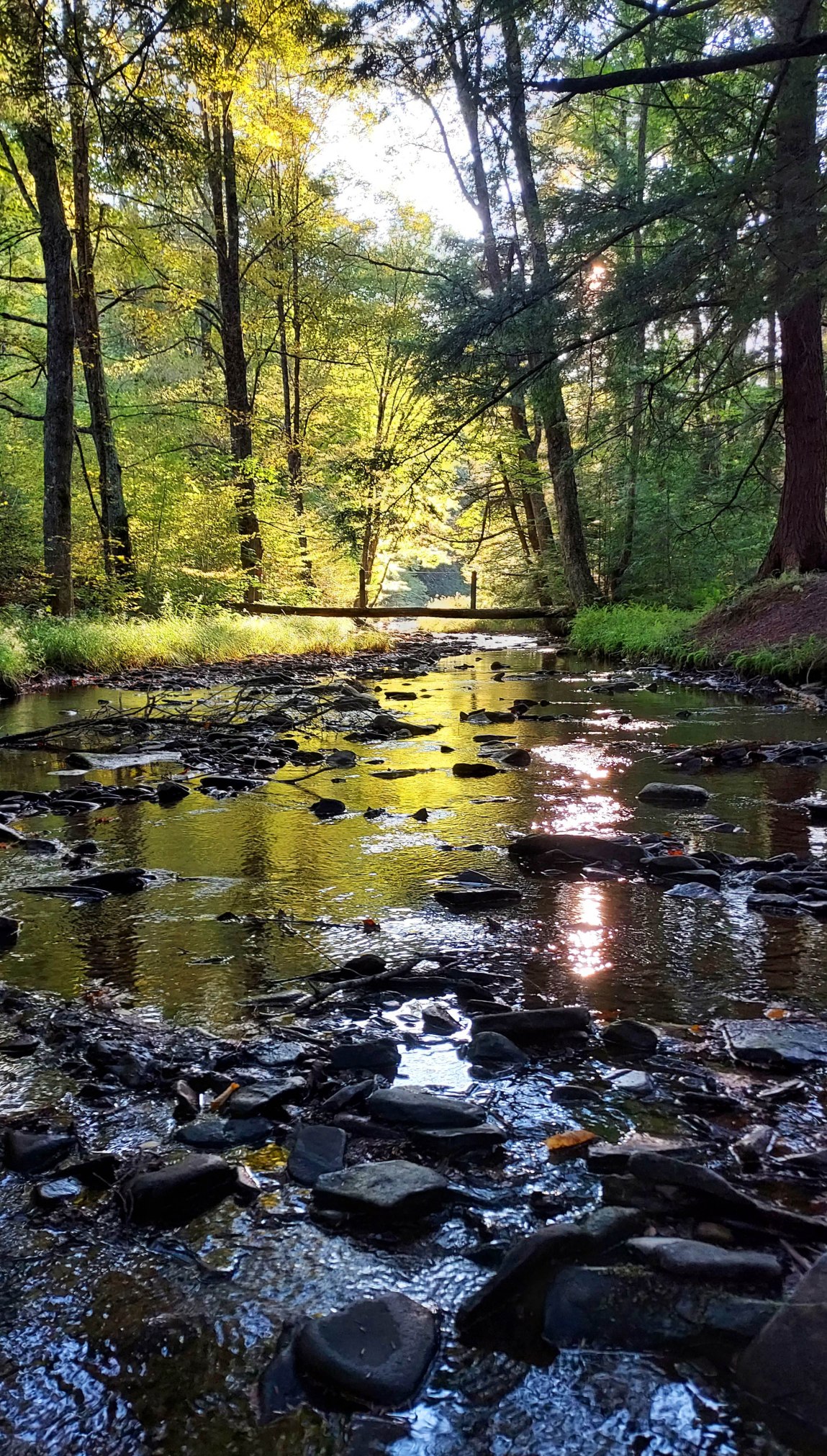
The best thing about hiking in the Pennsylvania Wilds is the backcountry campsites. The Appalachians can’t hold a candle to the other mountains I’ve visited in terms of dramatic landscapes. Compared with the Himalayas, the mountains of Pennsylvania barely register as bumps on the ground. But, at least on the Black Forest and Susquehannock trails, there are lots of absolutely beautiful campsites with plenty of water. If you’re a backpacker you don’t need a permit, and it’s perfectly legal to build a campfire (if there isn’t a fire ban). Nobody comes to bother you, unless you count coyotes and foxes and raccoons and bears crashing through the undergrowth in the middle of the night.
There is a dense piney stretch of the Susquehannock Trail called Spook Hollow. Why it’s any more spooky than any other patch of North-Central Pennsylvania backwoods I’m not sure. The whole region is full of the overgrown remnants of giant 19th-century industrial logging operations. The forests here were totally clear-cut back then, and there were vastly more people around. But then the logging operations so thoroughly devastated the landscape that the area was known for a while as the Pennsylvania Desert. That meant that the state was able to move in and buy giant tracts of destroyed land for cheap. Now the woods are full of the fading remains of century-old logging roads and workers’ camps. It gives the area a distinctly post-apocalyptic, civilization-fading-back-into-the-haunted-primordial-woods vibe.
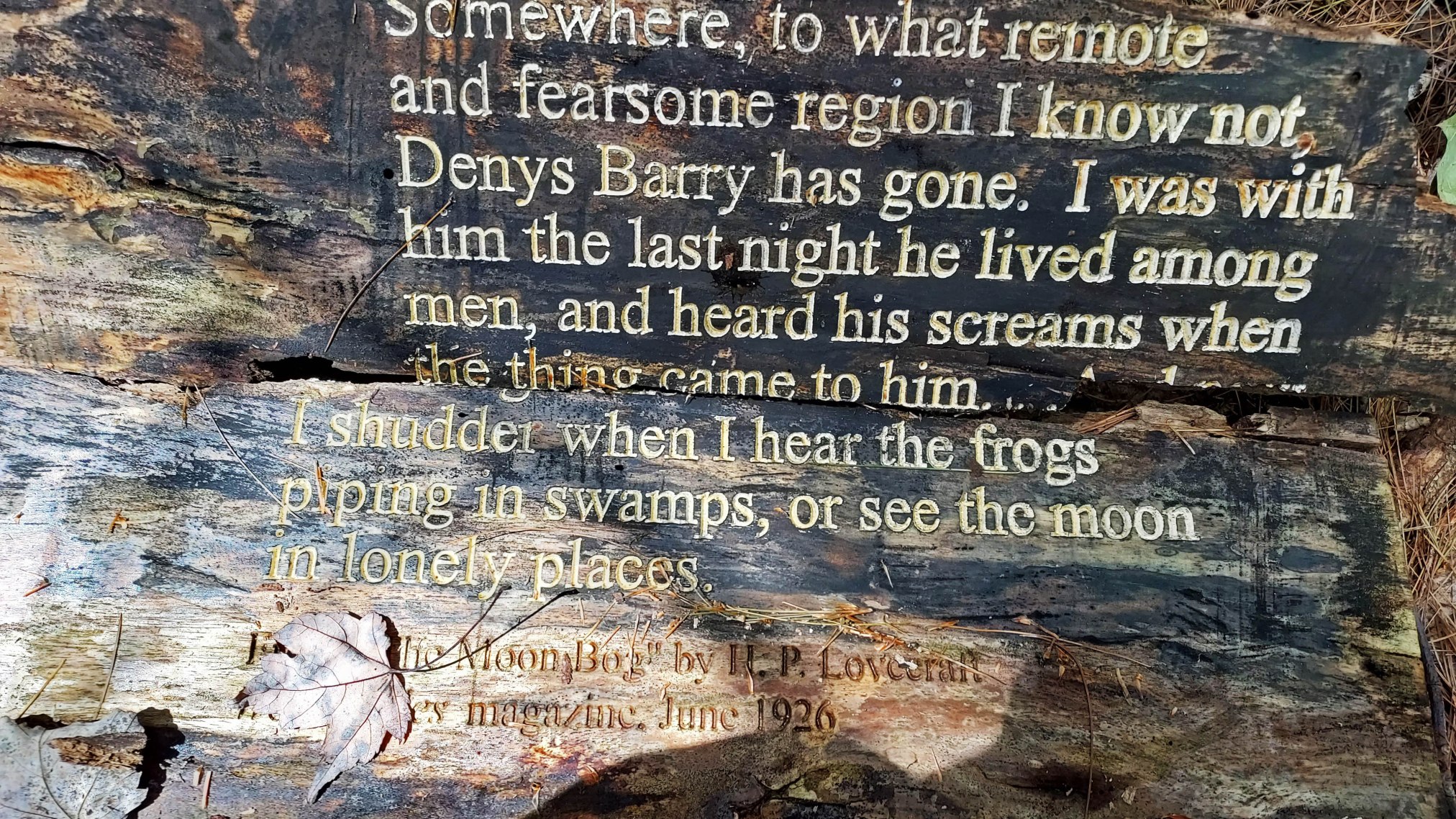
I guess some wag thought the atmosphere would be further spookified by this random quote from the early, Irish-tinged H.P. Lovecraft story “The Moon Bog.” The wooden board was originally attached to a sign, but the board fell down long ago and broke, leaving a weird cryptic H.P. Lovecraft quote miles from civilization in the middle of the woods…I promise this isn’t a weird dream I had.
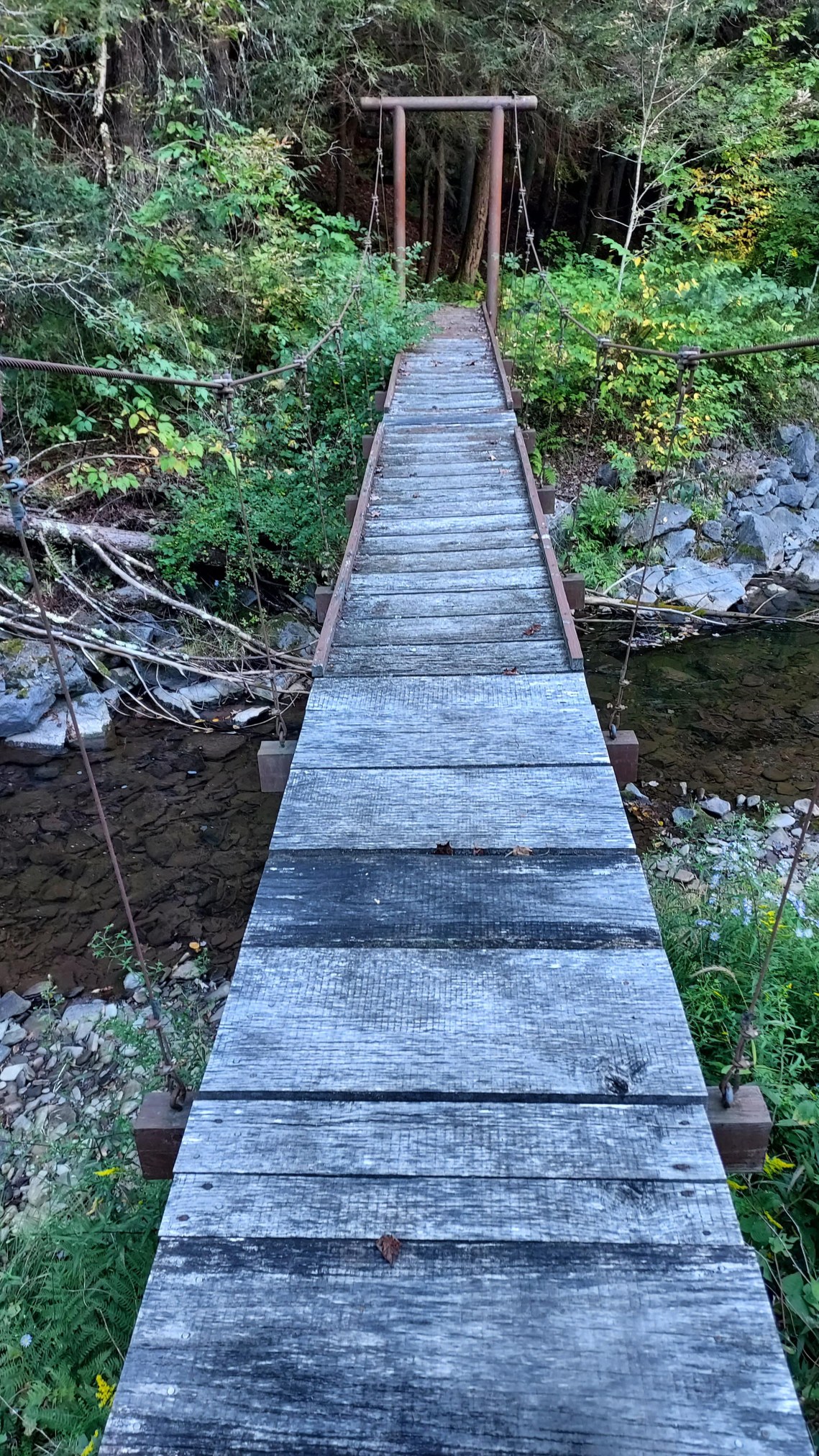
Suspension bridge over Cross Fork Run. I camped next to this, and never saw it crossed by another soul. North Central Pennsylvania is famous for being one of the few areas on the East Coast where it’s dark enough to properly see the night sky, though the profusion of trees on the trail meant that I rarely had a clear view of the sky at night. One of the few exceptions to this was when I camped next to this bridge, so that I could walk onto the middle of the span and see the Milky Way.
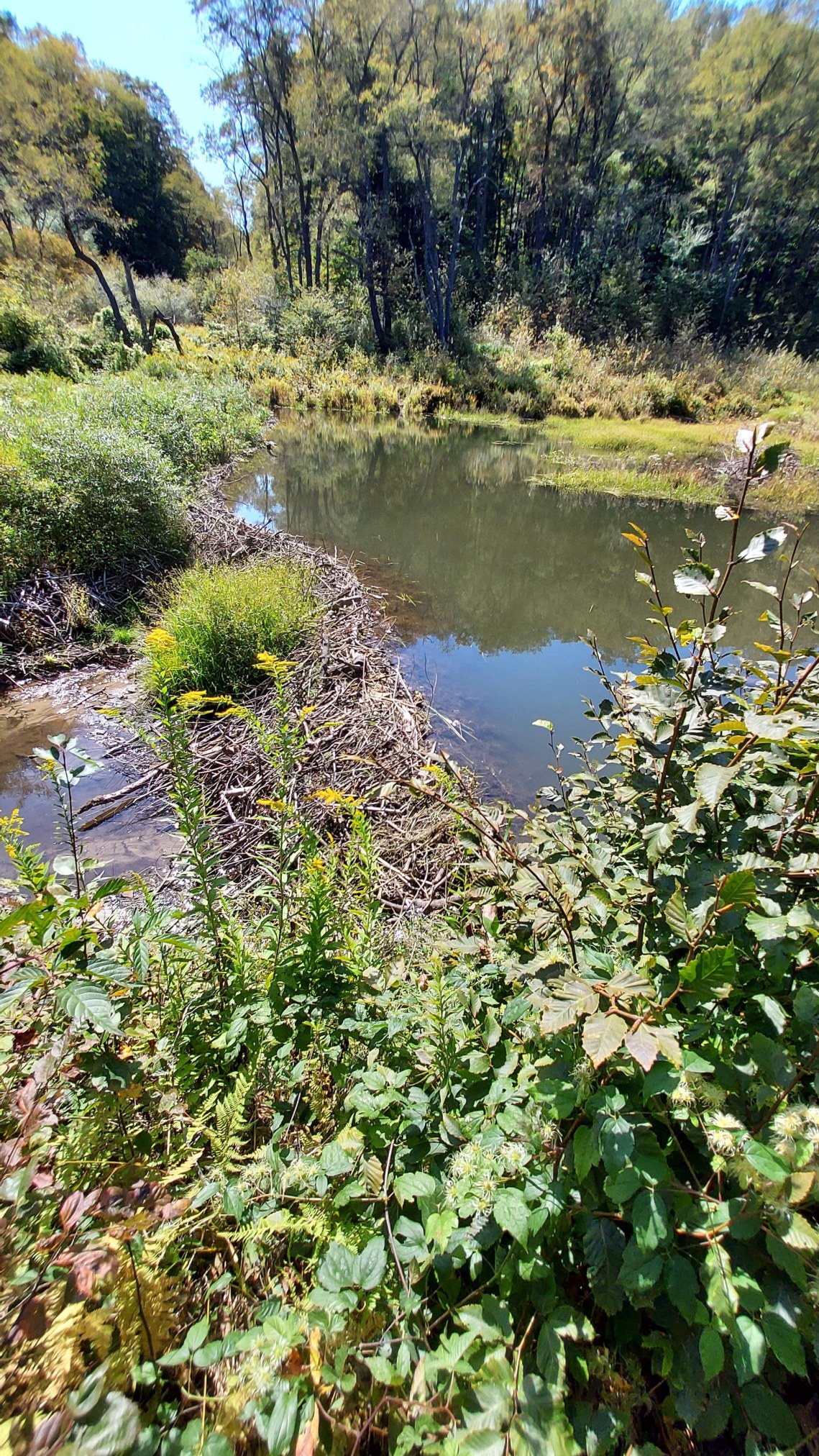
This is rather a difficult photography subject (especially when all you’ve got is a potato cellphone camera), but what you’re looking at here is a huge beaver dam across Lyman Run. There are several valleys along the Susquehannock trail where the beavers have been at it for generations. They construct dams across creeks, and then the lakes they create fill with silt, so the beavers move upstream. After a while, this begins to shape the whole landscape; the creeks become a succession of muddy terraces with beavers paddling around in them, slapping their tails at the occasional passing hiker.

 Patrick Rogers