Author of The Green Unknown: Travels in the Khasi Hills
Frozen Fair Hill
It rarely gets bitterly cold in Northern Delaware/Northeastern Maryland. The temperature may dip below freezing at night, but a normal day in January is highs in the mid 40s, lows in the upper 20s. Not warm, but not brutal. Some years it doesn’t even snow.
Big Elk Creek, which flows through the middle of Fair Hill
But this winter, my neck of the woods had a real, honest to goodness, this-can-really-kill-you cold snap. The rivers froze so hard you could walk on them, which only happens once every five years or so. Wind chills went down well below zero some nights. For about a week I could pull my niece about half a mile overland on a sled with a few inches of snow underneath. It was a proper winter, thanks to the dreaded Polar Vortex (or, rather, the destabilization of the Polar Vortex, leading to arctic air sort of spilling out of the frozen north and down over the continent. Confusingly, people have started referring to this phenomenon simply as “a polar vortex” when, if I’m getting this right, the cold air coming so far south is due to the Polar Vortex weakening until it is much less polar, and much less vortex-like…but I digress).
On one of the coldest mornings I decided to go out to Fair Hill Natural Resources Management Area with my old DSLR camera, determined to snap some photos of the scenery in a wintery mood one rarely gets to witness. I nearly came to regret this: The cold was genuinely dangerous, and I soon noticed that I my hands had gone strangely numb. My camera also wasn’t too happy with 7 degrees and a -15 wind chill. The screen went unexpectedly blank a few times and the autofocus seized up. But once the sun had risen a bit, I managed to at lest get a handful of aesthetically chilly photos.
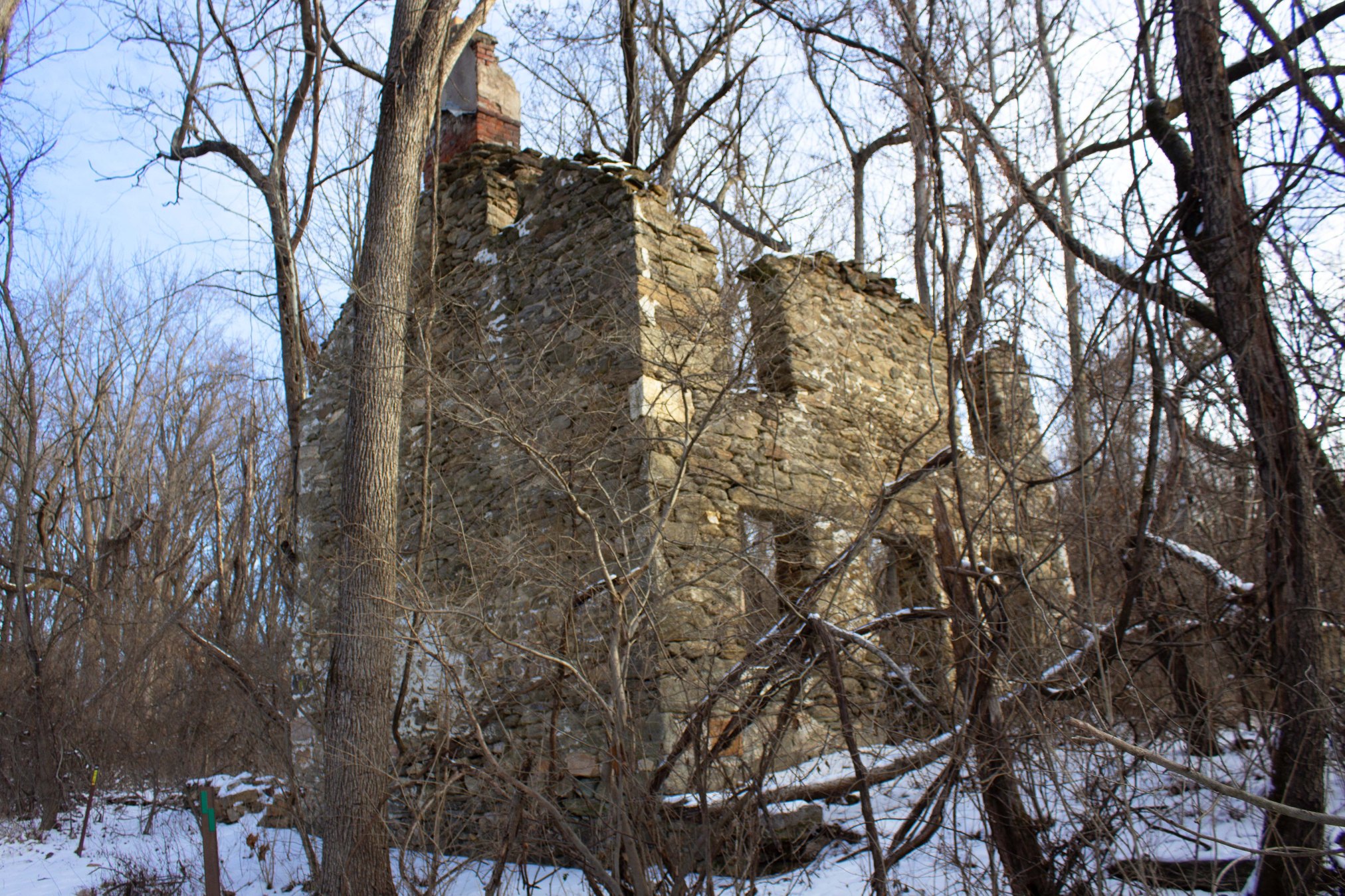
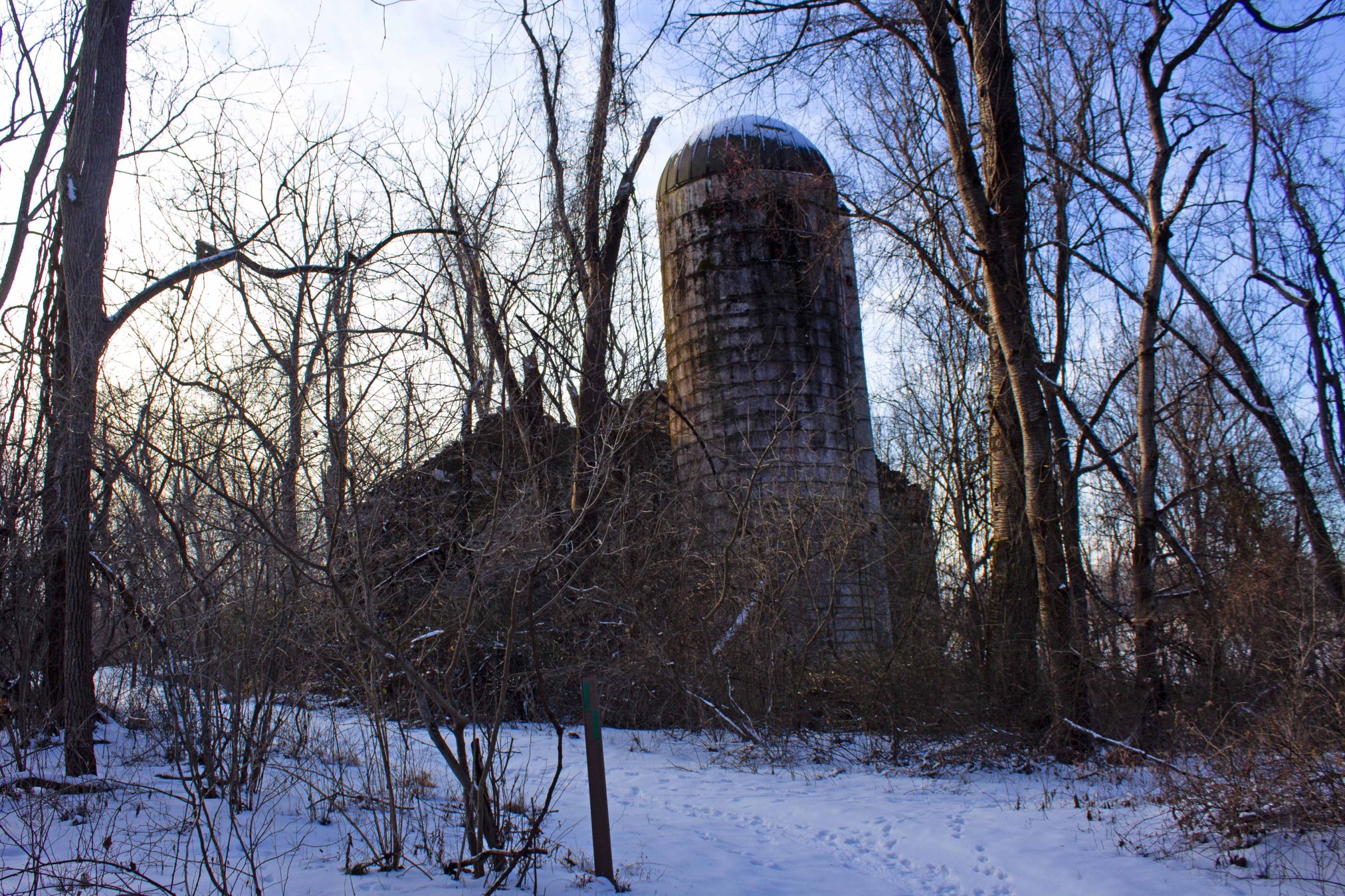
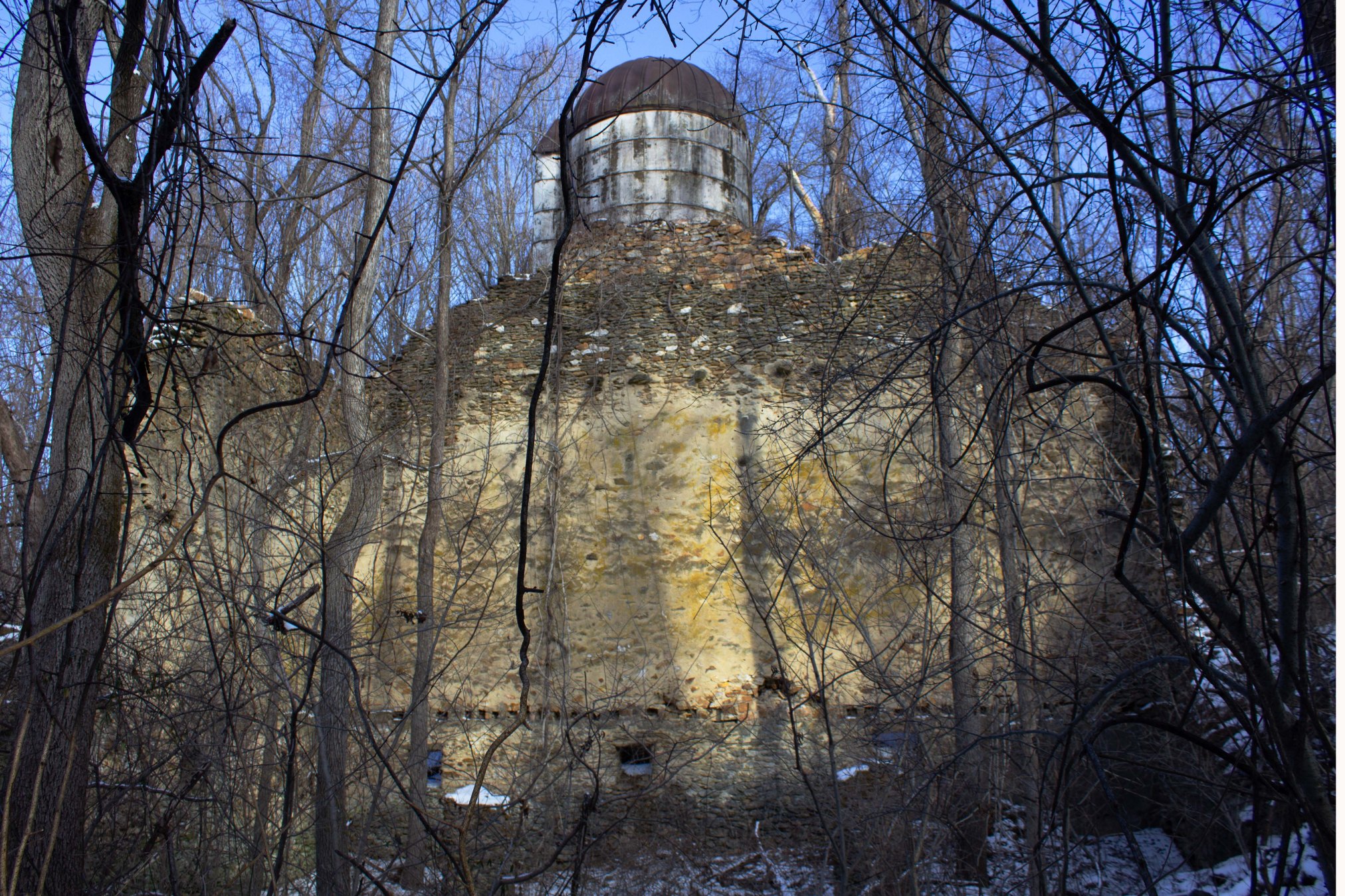
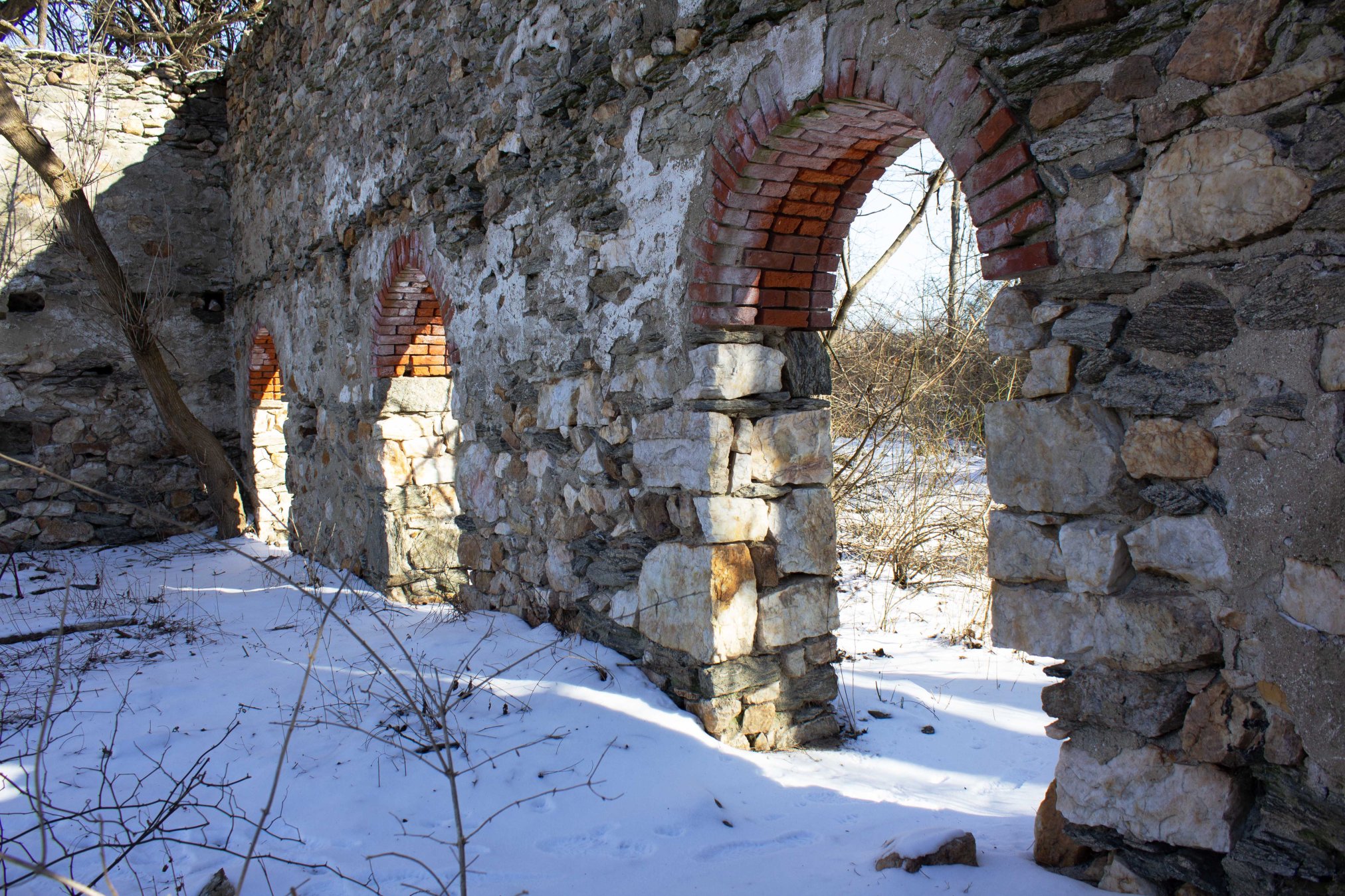
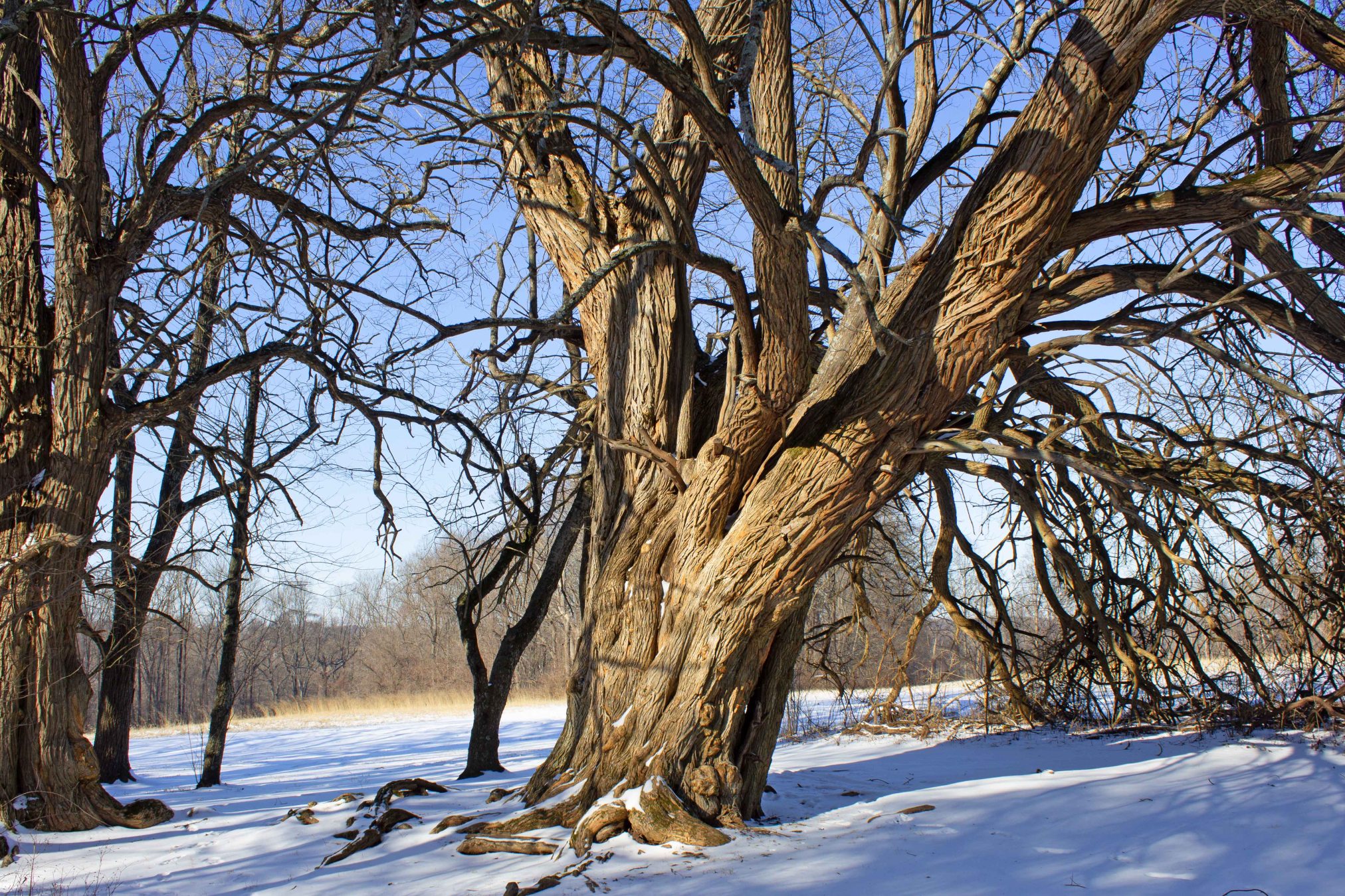
Ruins of the Alexander Tract. The Alexanders were a Scotts-Irish family who came to America in the late 17th century for religious freedom. They went on to establish one of the largest farms in what would later become Fair Hill. The house above only dates from the 19th century, though it was built on the site of a significantly older structure. Looking into the ruins. Note that you can see where the second floor was, and where the beams that would have held up the floor/ceiling went.Ruined barn and grain silo, which is next to the Alexander house.This is one of the most extensive ruins in all of Fair Hill, though it’s full of trees and underbrush which make it difficult to visit. When you go by this spot in the summer, the ruin is mostly obscured by vegetation, so you get no idea of just how big it is.Creepy cosmic horror vision inside the grain silo. A much smaller ruin about a mile and half down the trail. This is the McCloskey Barn, which was built in the early 19th century, and was still a going concern into the 1930s, when the Dupont’s bought up the whole area as a private equestrian preserve (having in many cases simply hired the farmers who were already working the land to keep on farming it). Say what one will about the DuPont’s, but the fact that there are surprisingly large chunks of public park land around Northern Delaware and Cecil County is chiefly due to their conspicuous consumption.Scenic archwayA large Osage orange tree. These are not native to the area, but instead were planted here to serve as hedges and boundary line markers. A random fellow hiker once informed me that this was the largest Osage orange tree in Maryland. Sadly, I think he was mistaken, as I can’t find anything confirming this online. Still…this is an awfully big Osage orange tree.An outcropping protrudes over Big Elk Creek. This is one of my favorite spots in the Fair Hill area. It’s actually about a third of a mile across the border into Pennsylvania, so it’s technically part of Big Elk Creek State Park, though it was still part of the DuPont’s landholdings. The frozen Big Elk RiverOh Deer
If you enjoyed this post, please consider supporting me on my Patreon page. There, you can download an extended edition of my book The Green Unknown which includes several chapters available exclusively on Patreon.







 Patrick Rogers